

How To Clean Laquered Maple Finger Board
Beingness able to do your ain guitar maintenance doesn't just save y'all money, information technology's too a nifty way to understand how the different features of an electric guitar affect its tone and playability. Nosotros've teamed upward with Jack Ellis from Manchester'due south Jack'southward Instrument Services to come up up with a guide to cleaning and maintaining your guitar's fretboard…
Today we're covering fretboard maintenance to help keep your guitar looking and performing well.
Performing I hear you say? Yep an ill-maintained fretboard will shop crud and ho-hum down new strings much faster also as a dried out unlacquered fretboard tin cause all kinds of fretting woes. When a rosewood (or other unlacquered fretboard) dries out it shrinks, this means the fret slots can let go of the fret! You can imagine a loose fret not only sounding terrible but volition be a cause of fret fizz when playing too.
A bit of maintenance from yourself is all that'southward required to proceed this nether control. Nosotros'll embrace how to care for lacquered and unlacquered fretboards in this handy article.
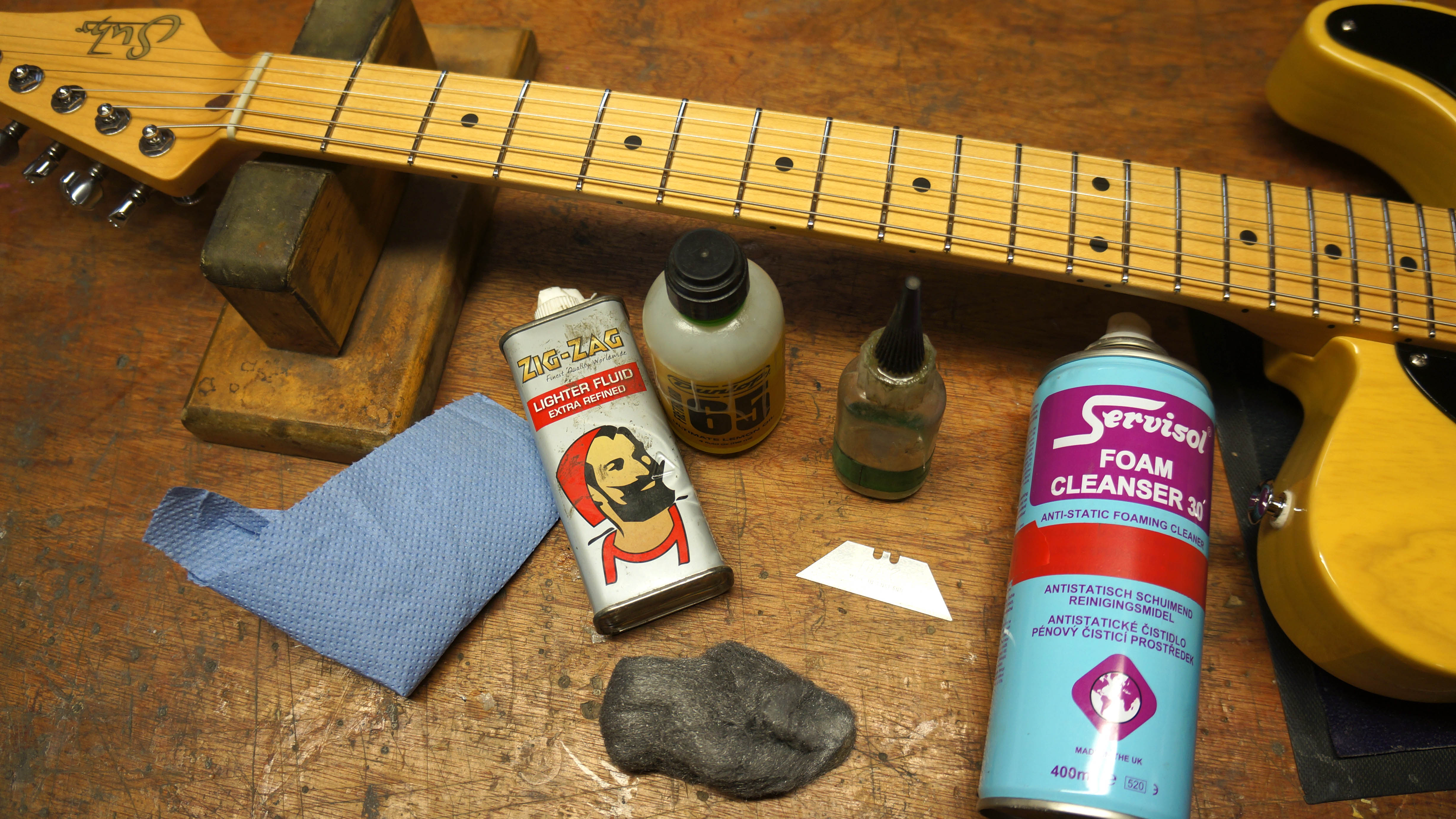
- Blue Roll
- Servisol Cream Cleanser thirty
- Lighter fluid / Naptha
- Cocktail sticks
- Wide masking tape
- #0000 Wire wool
- Stanley blade
- Lemon oil
- Almond oil
Cleaning lacquered fretboards
Our lovely maple fretboards are a light coloured hardwood which unfortunately shows up loads of grime! Maple fretboards are most often lacquered with an amber tint only there are some that are non. Many fretboards begin life as a satin or matt lacquer which as you play it will self shine turning it gloss, many folks often mistake a satin lacquer for unfinished as information technology feels a little rougher.
If you lot accept an actual unlacquered fretboard you will nigh likely find the manufacturer has made a point of mentioning information technology. Some people like the feel of bare timber, however this does not protect the wood and crud will easily stick to it and soak in causing a permanent stain.
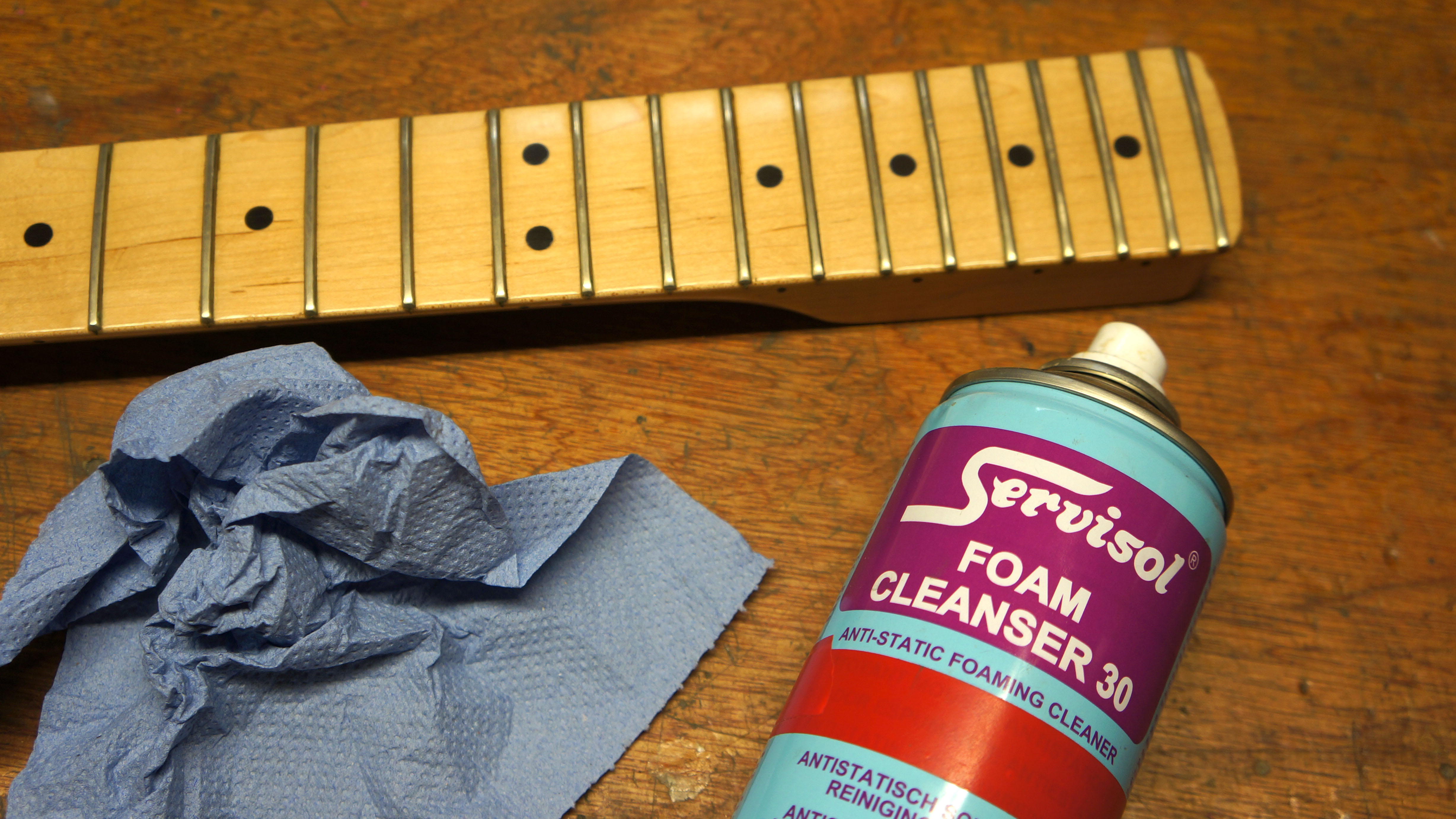
For our lacquered fretboard this is the care required to keep them looking sweet. Let'due south appraise how delicate the lacquer might be, if you take signs of wear where the bare timber looks to exist exposed you need to be cautious.
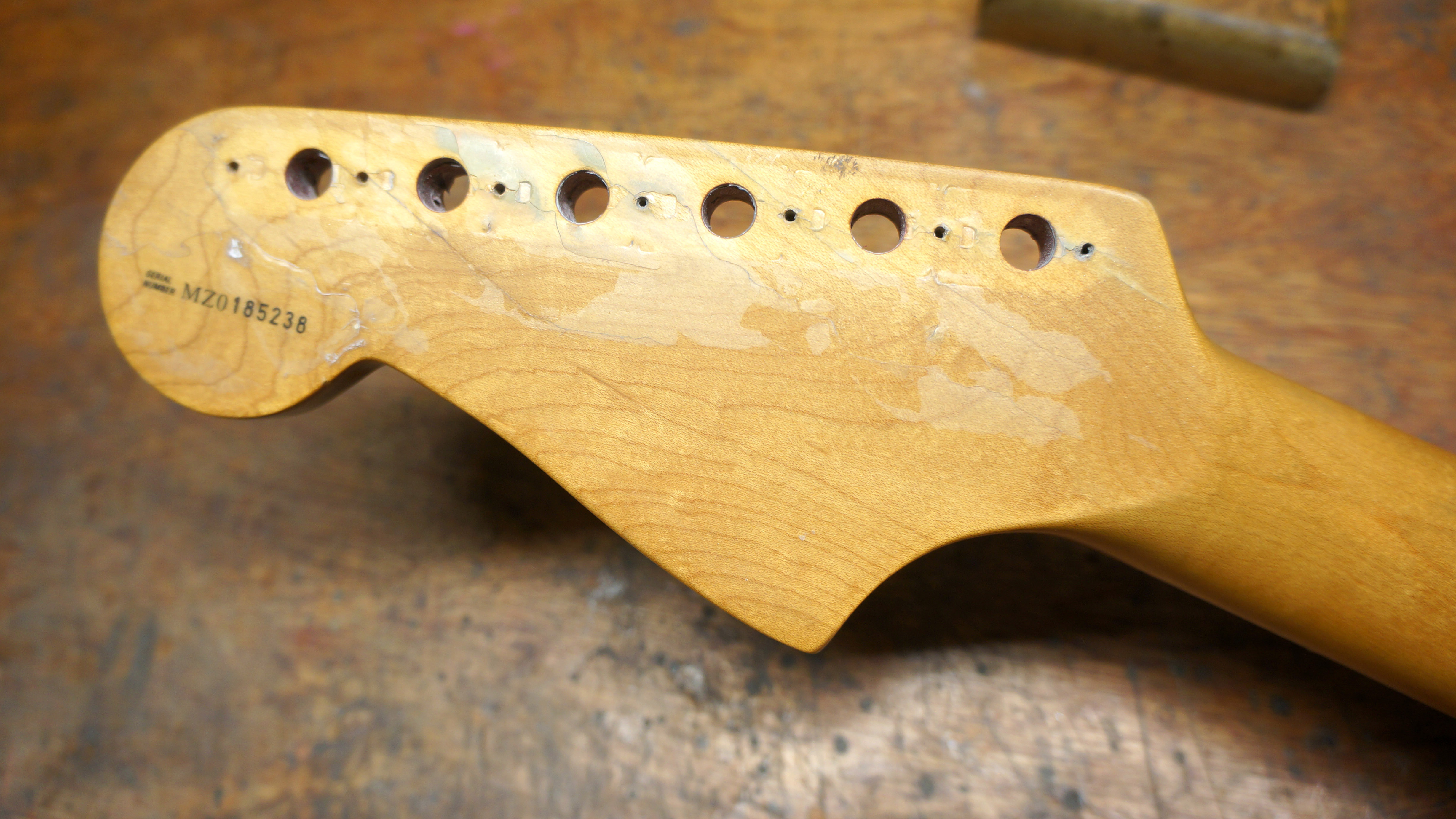
For some reason Fenders from the 90s and early on 00s seem to have lacquer that these days is falling off with fiddling persuasion.
Here's the rear of a Fender Toronado headstock exhibiting the classic skin, if your guitar looks like this you lot're definitely in this category!
If your fretboard and neck show signs similar this you should only employ lighter fluid to clean it along with a gentle impact.
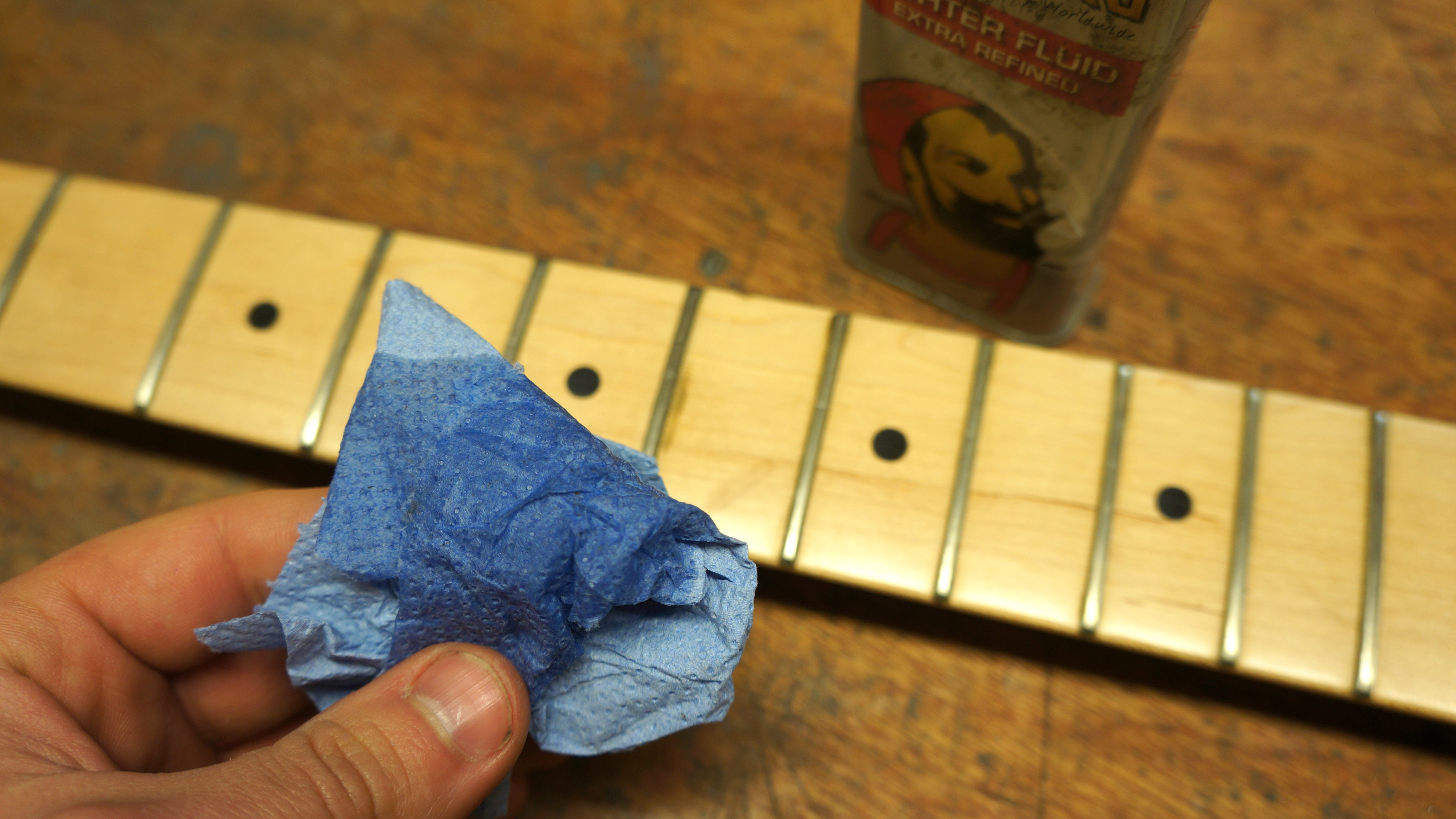
To clean delicate lacquer / croaky lacquer: Soak some blueish roll in lighter fluid and lightly rub the fretboard surface. The lighter fluid will dissolve the grease build upwards as well every bit lift other dirt that's stuck to information technology. The lighter fluid will evaporate very quickly so will not harm the timber.
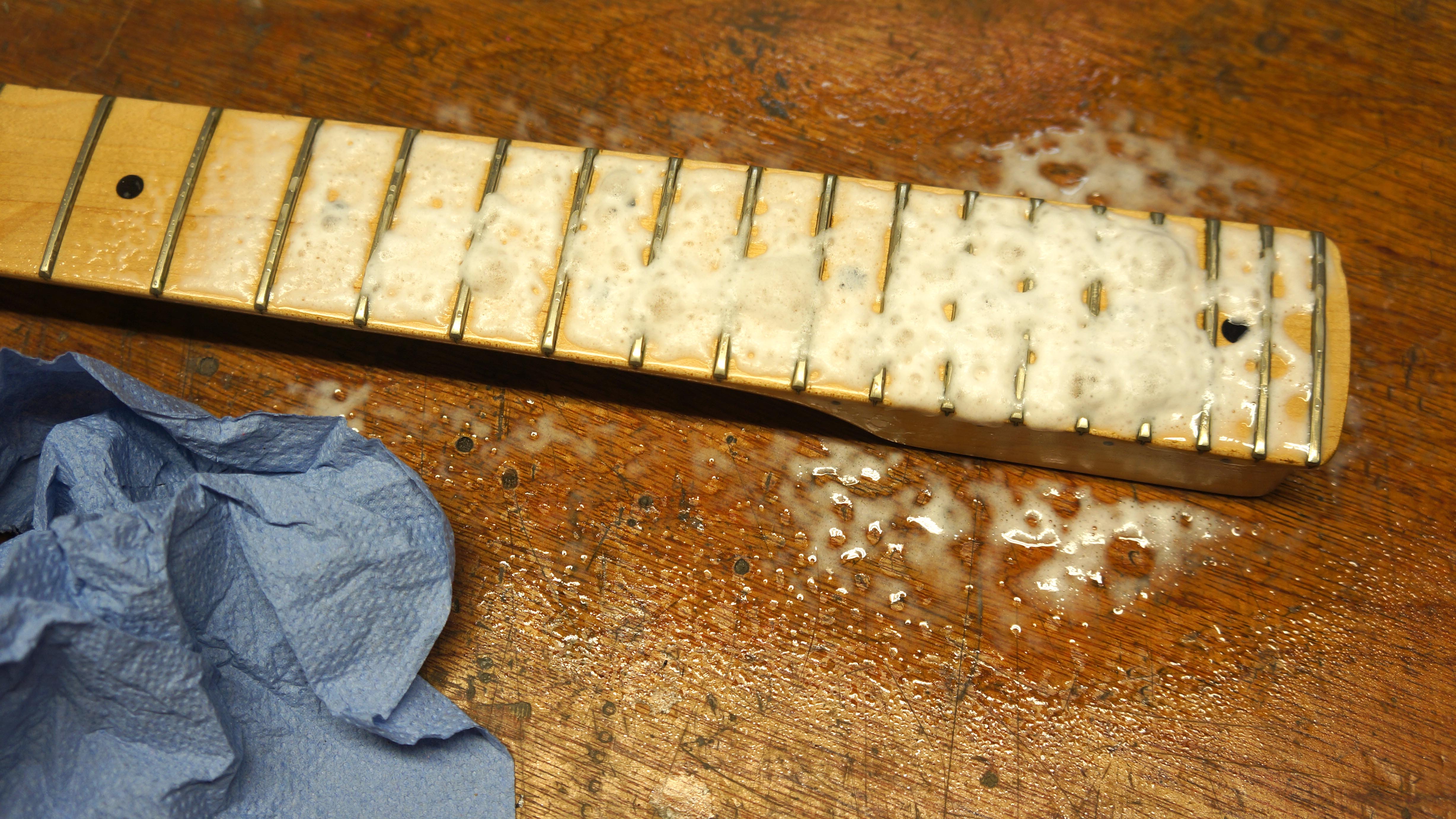
A new fretboard is a touch easier and you can be a little rougher with information technology. New lacquer means it's sealed upwardly and not chipped, it's sort of weather proof. Servisol Foam Cleanser 30 is great for lifting off clay.
Eject a chip on and let it foam up, let information technology soak for 30 secs then begin to wipe off. Try a 2nd application for more stubborn broth.
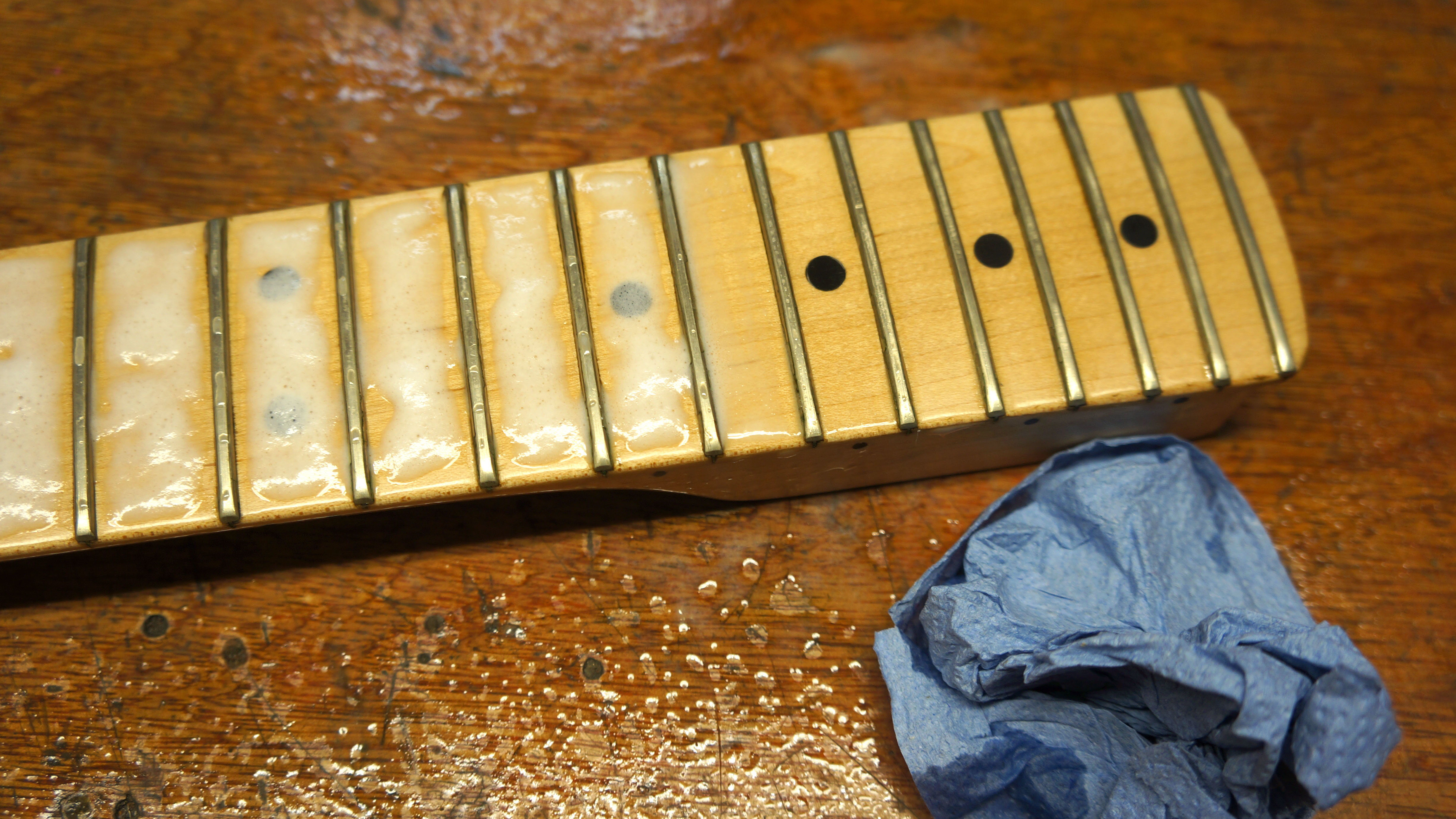
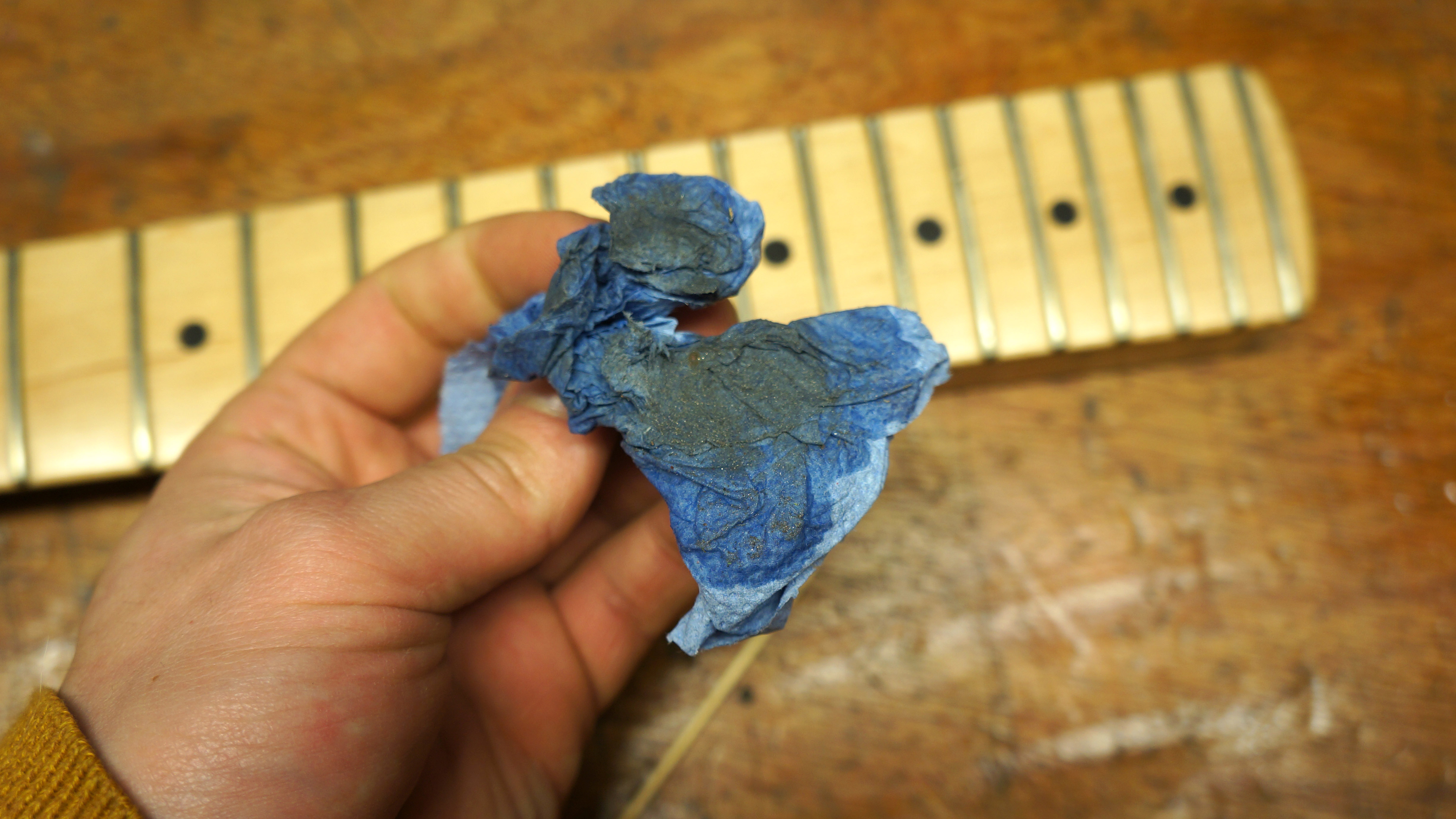
Observe the colour of your bluish roll subsequently!
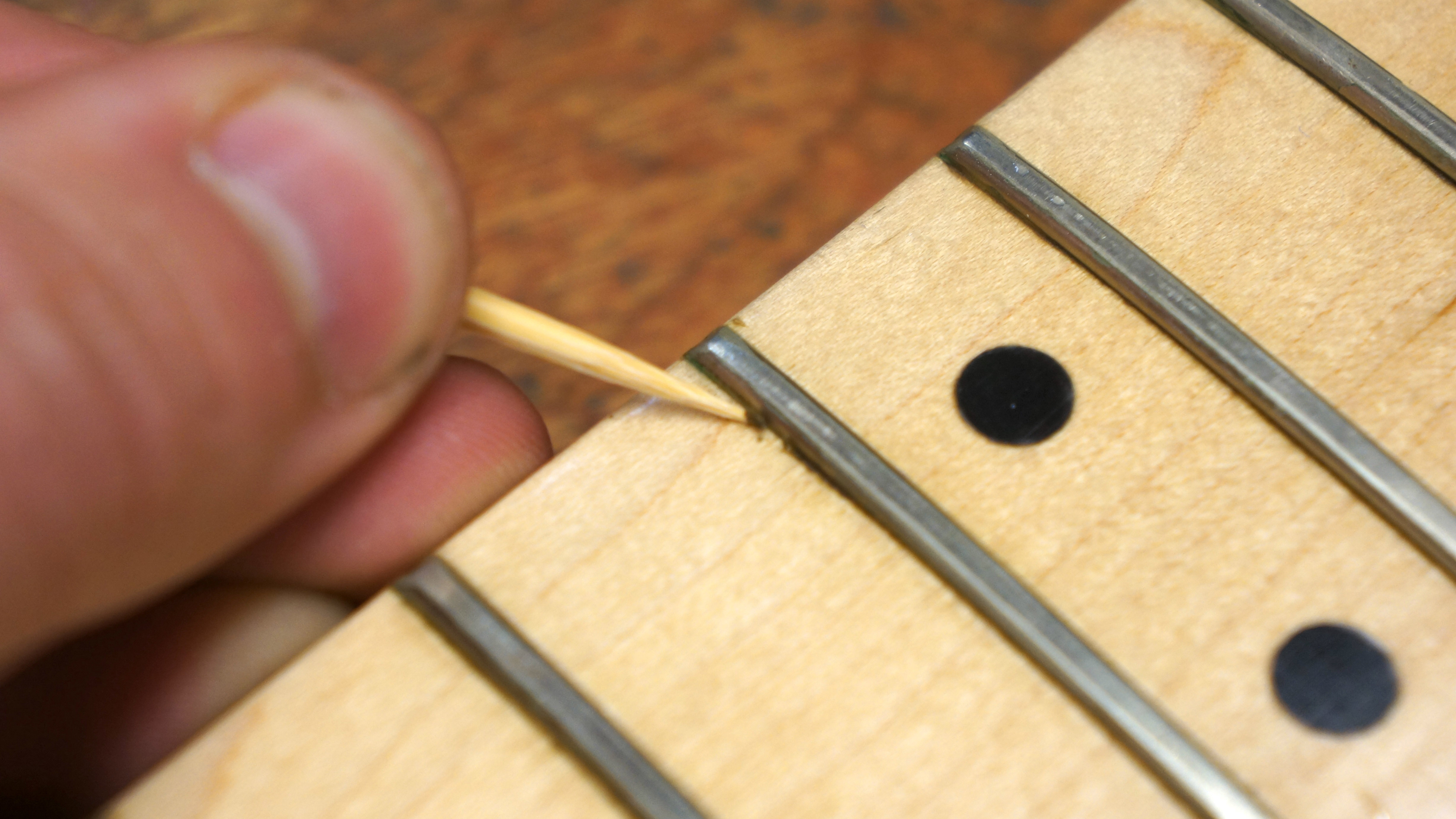
If in that location's still a crud build up at the edges of the frets so nosotros'll take to bring out the tiny pokey tool, a cocktail stick.
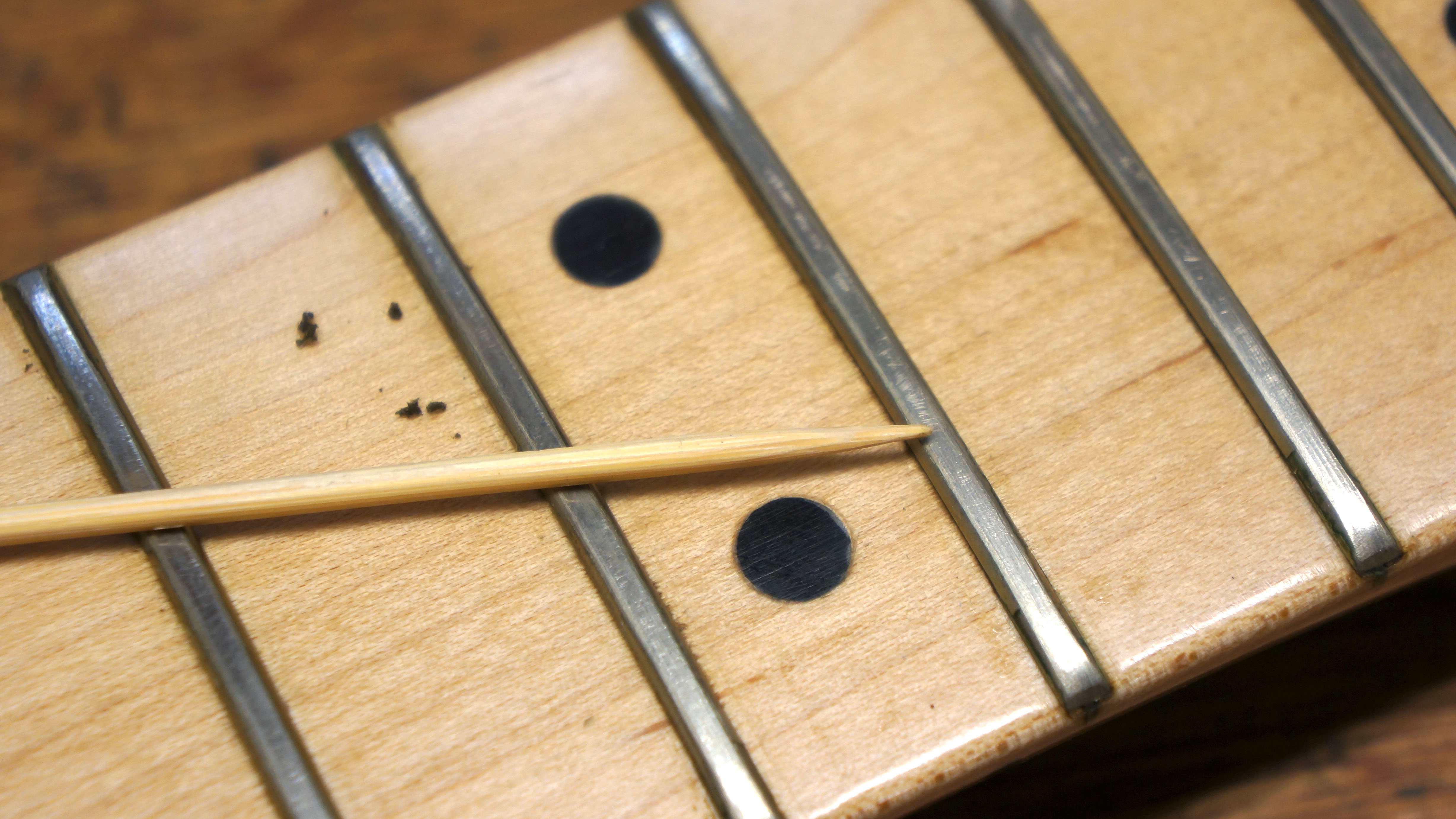
Use this to pick out the harder stuff and then repeat the foam cleaner phase. We chose a cocktail stick as it'south soft enough not to damage lacquer.
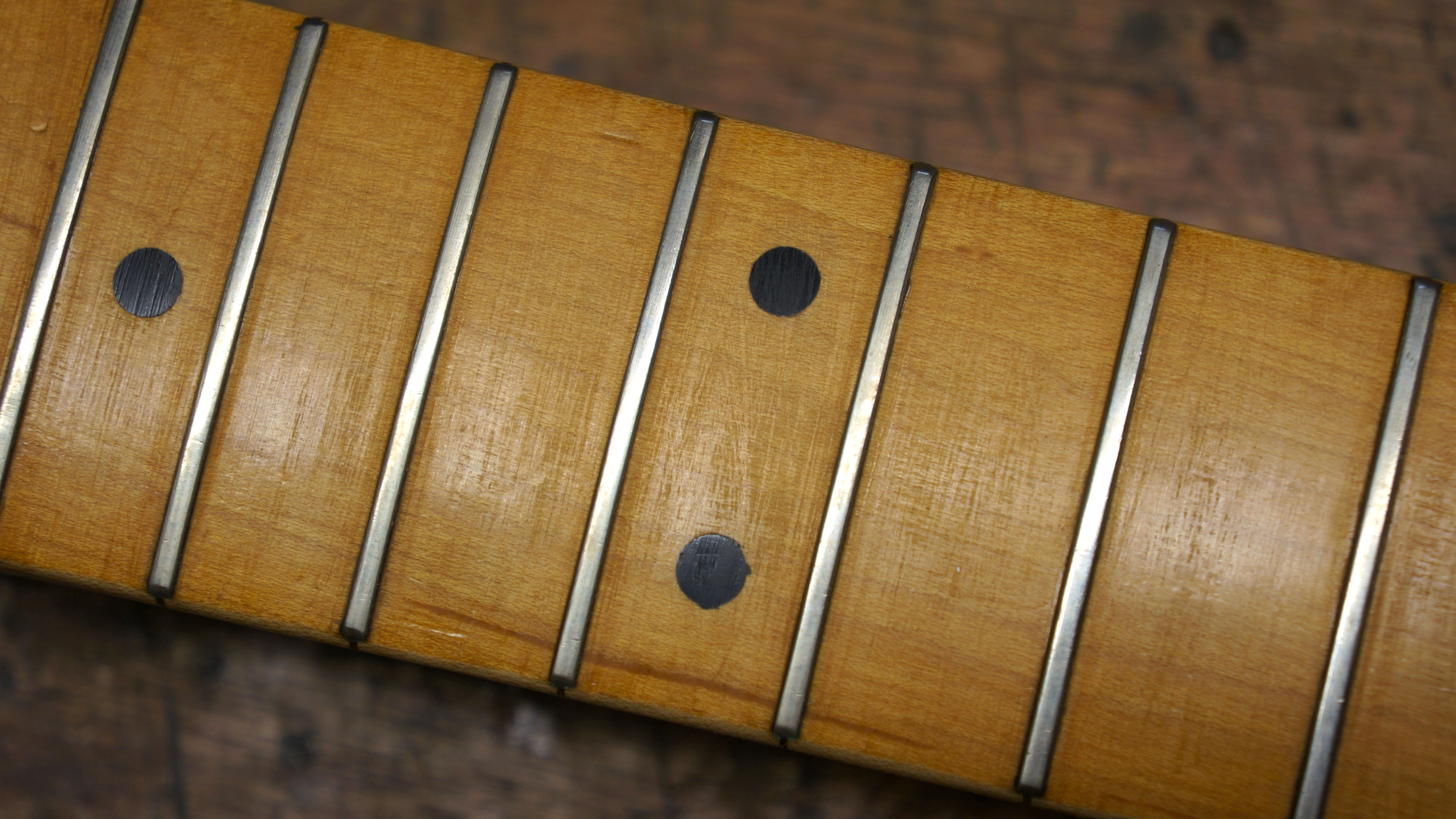
How not to practise it:Someone'due south been aggressively cleaning information technology with a brillo pad or a washing up abrasive sponge here leaving permanent scratches to the old lacquer.
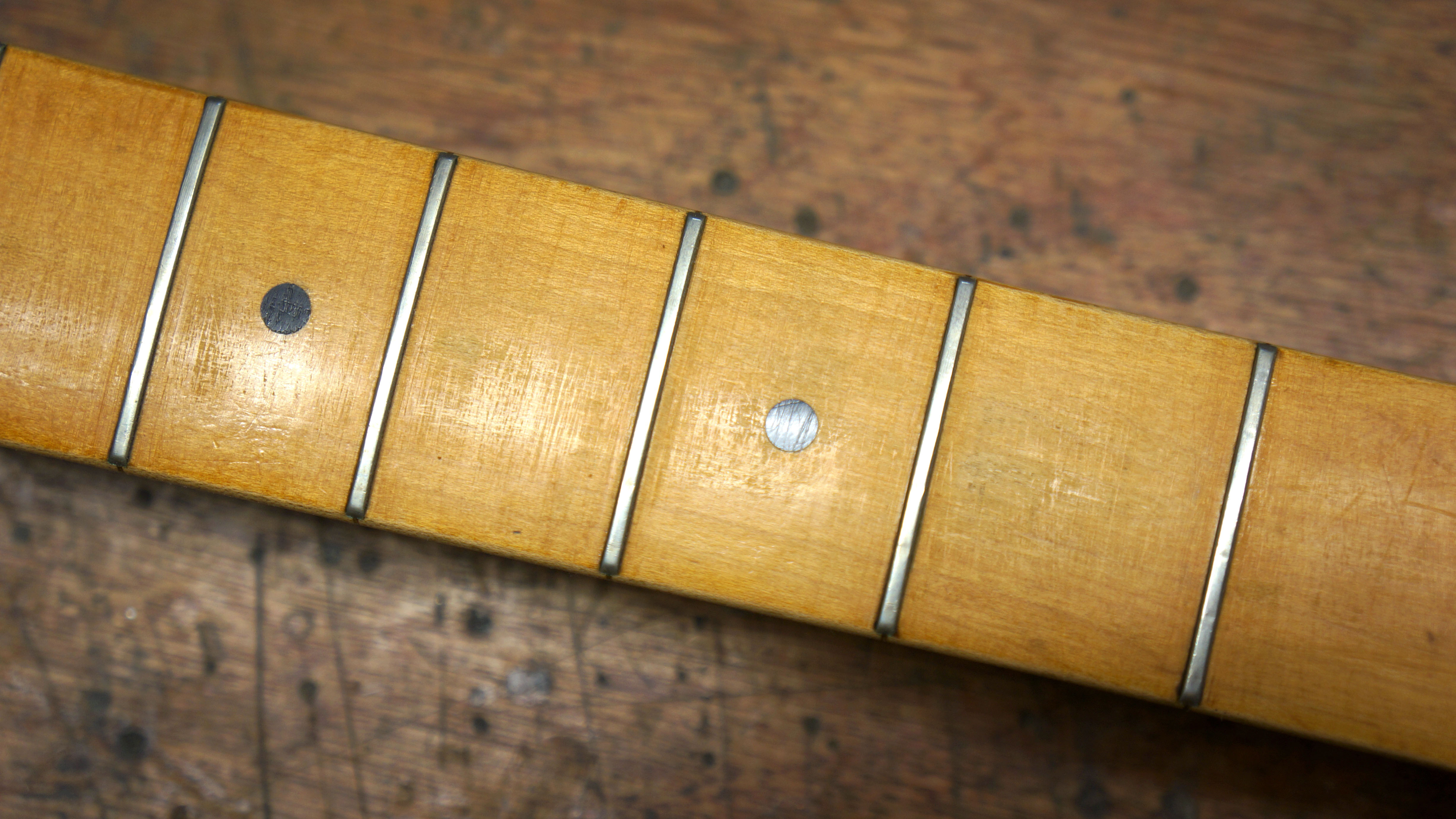
Caring for rosewood, ebony and pau ferro fretboards
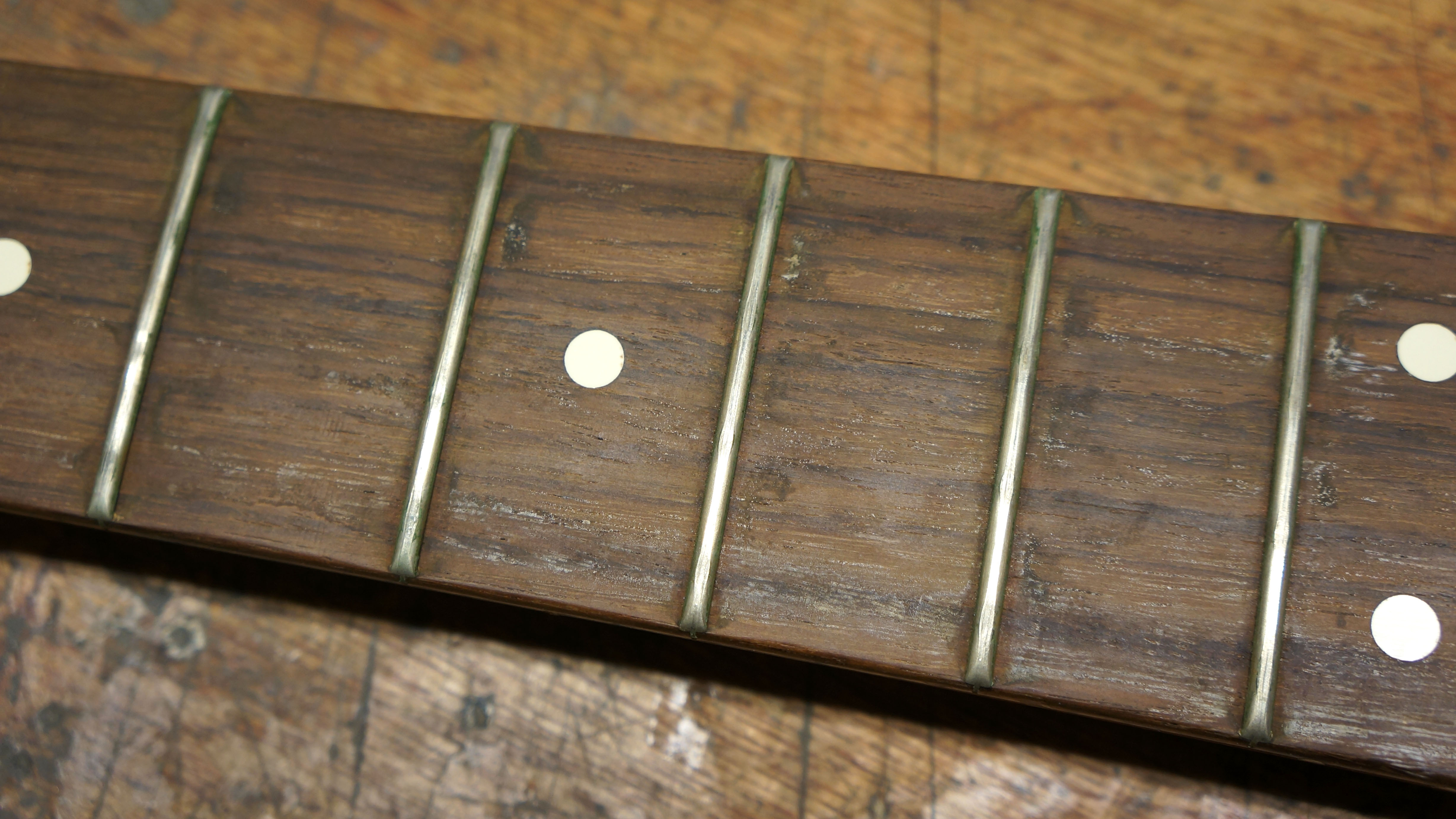
These fretboards types are again hardwood but are not commonly lacquered (apart from Rickenbacker!) as such they tin absorb dirt and crud. One advantage is though if they are super grimey we tin only scrape the fretboard clean and reveal a fresh surface!
Here's a Squier P Bass neck that's been extensively played then left somewhere damp. It's fully dry out once more now but the h2o has left the white marks at the end plus nasty goop from playing lower downwards the cervix.
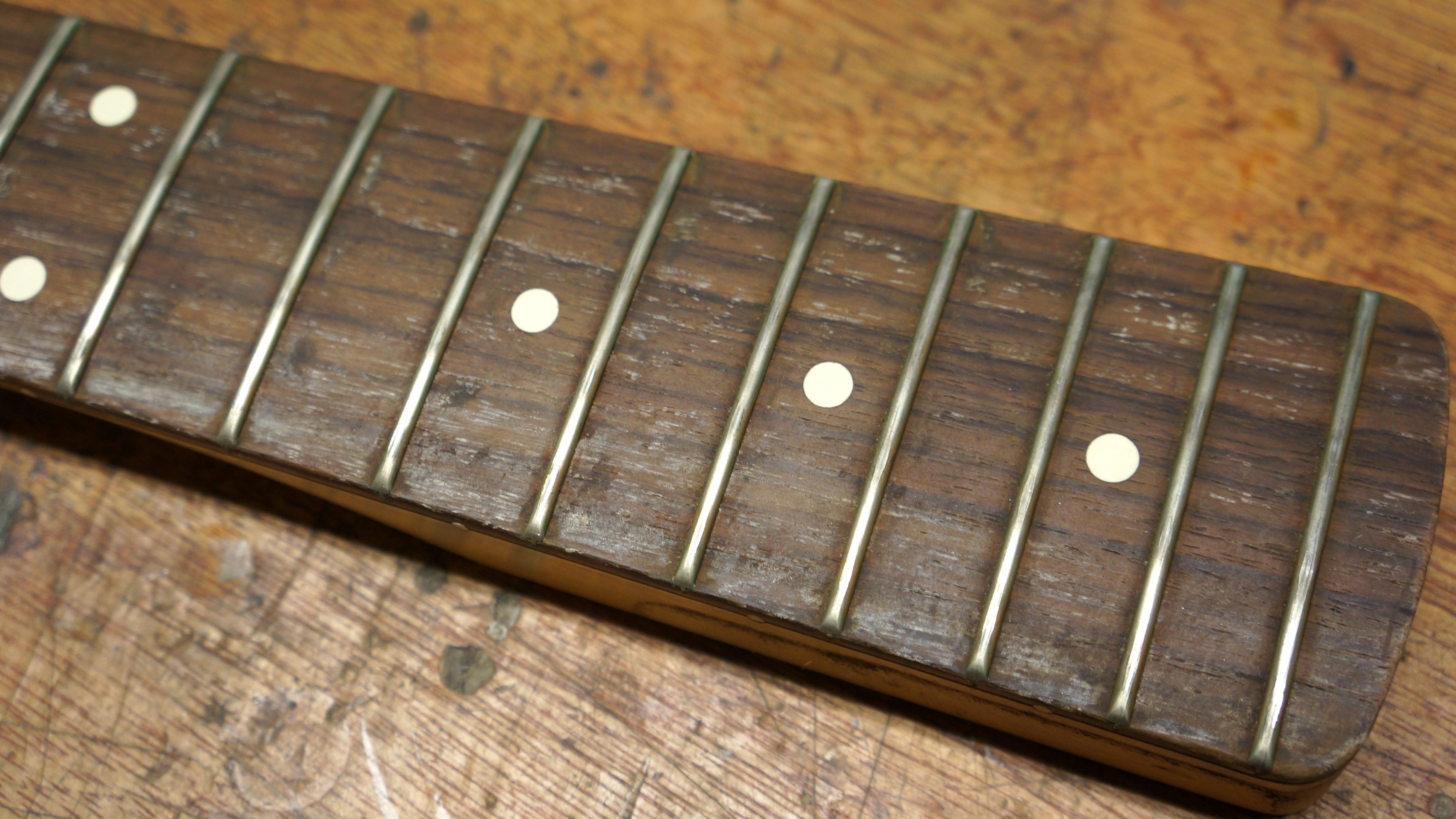
This is so dirty that nosotros may every bit well just go straight in for the scrape. Get a fresh Stanley bract and scrape fret to fret swooping over the curved fretboard equally you get. Y'all're gratuitous to scrape the tops of inlays too.
⚠ Be enlightened that some fretboards are stained to enhance the colour. This ways the timber has a thin coat that may be removed when scraped. A clue would be on an old fretboard the fingers wearing away a much lighter patch. After scraping be prepared for a much more interesting fretboard with some streaks or figuring to the timber. Low end learner guitars and ebony fretboards seem to be the near normally stained.
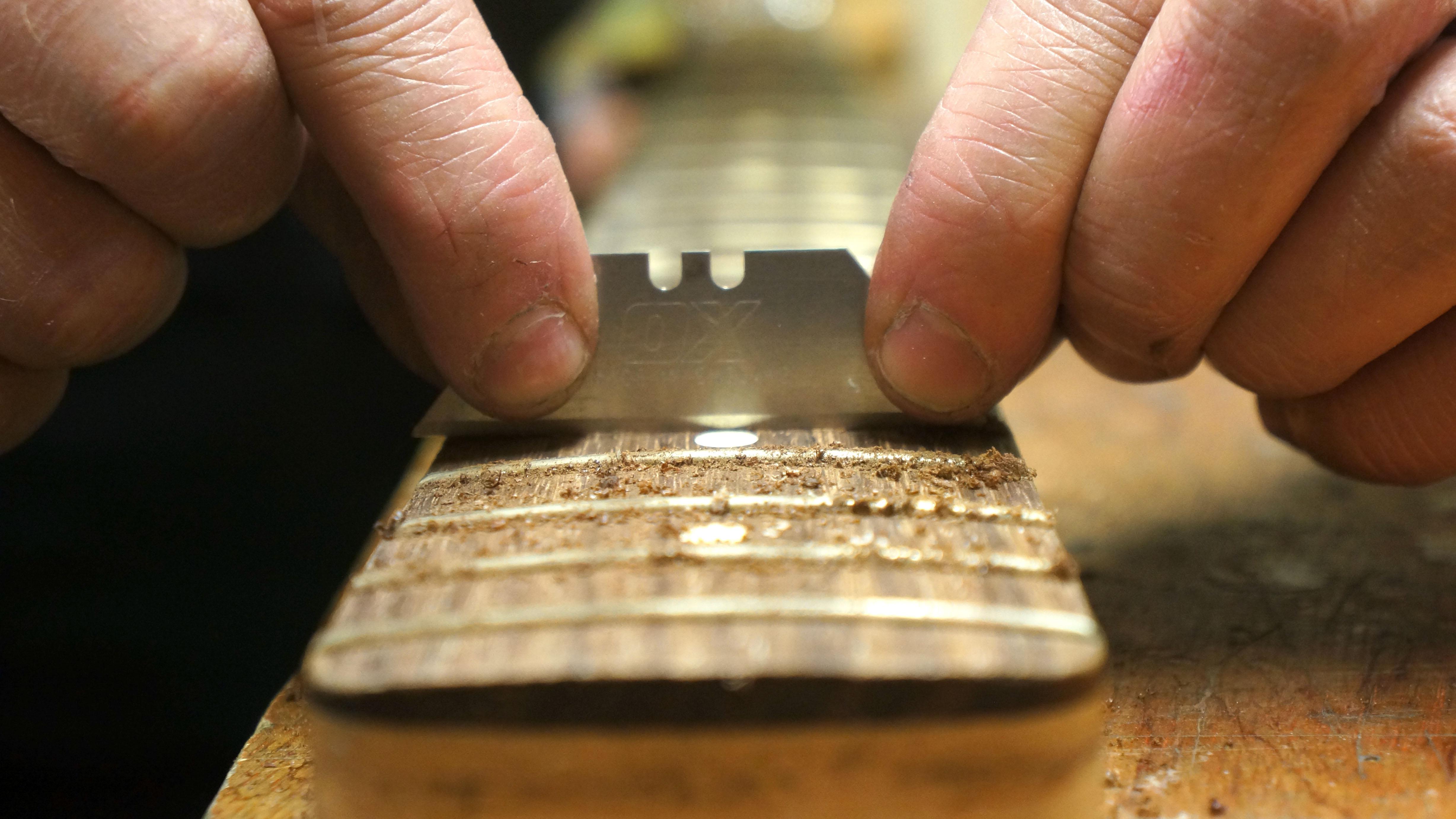
Exist careful to maintain a light down pressure and so you don't skip over the fret top. If your blade becomes damaged by skipping over a fret top you volition need a new blade otherwise it will get out imperfections in the scraped surface.
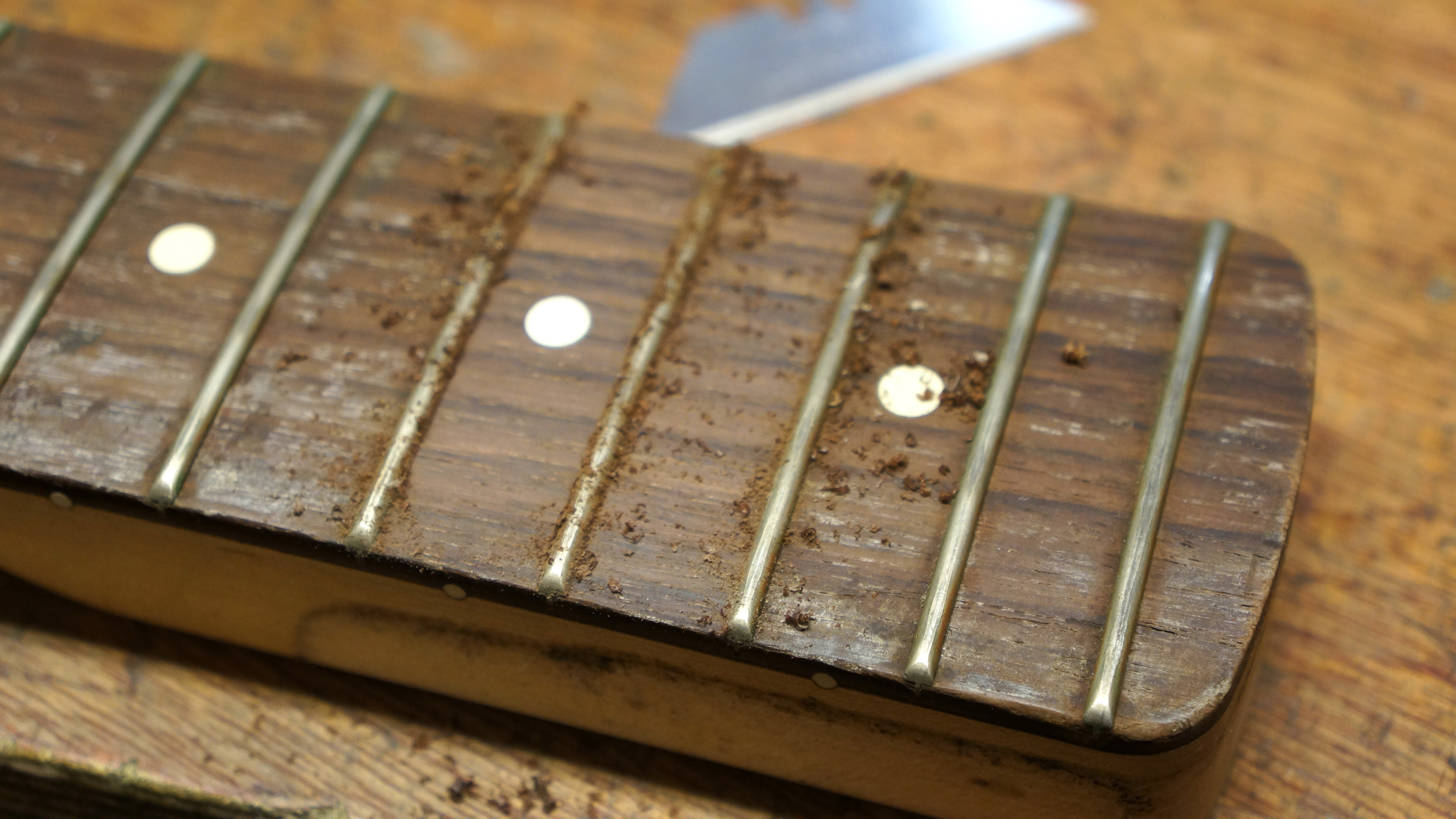
To bring a lovely uniformity to the fretboard you can use #0000 wire wool on the fretboard. Every bit an awesome bonus this volition automatically give your frets a calorie-free smooth besides!
⚠ Exist aware that y'all demand to protect your paint job and particularly the pickups from wire wool. It's abrasive and will scuff upwardly a gloss finish and the grit that comes off volition stick to your pickup'south magnets! Apply wide masking tape to aid protect or better nevertheless remove the neck from the guitar.
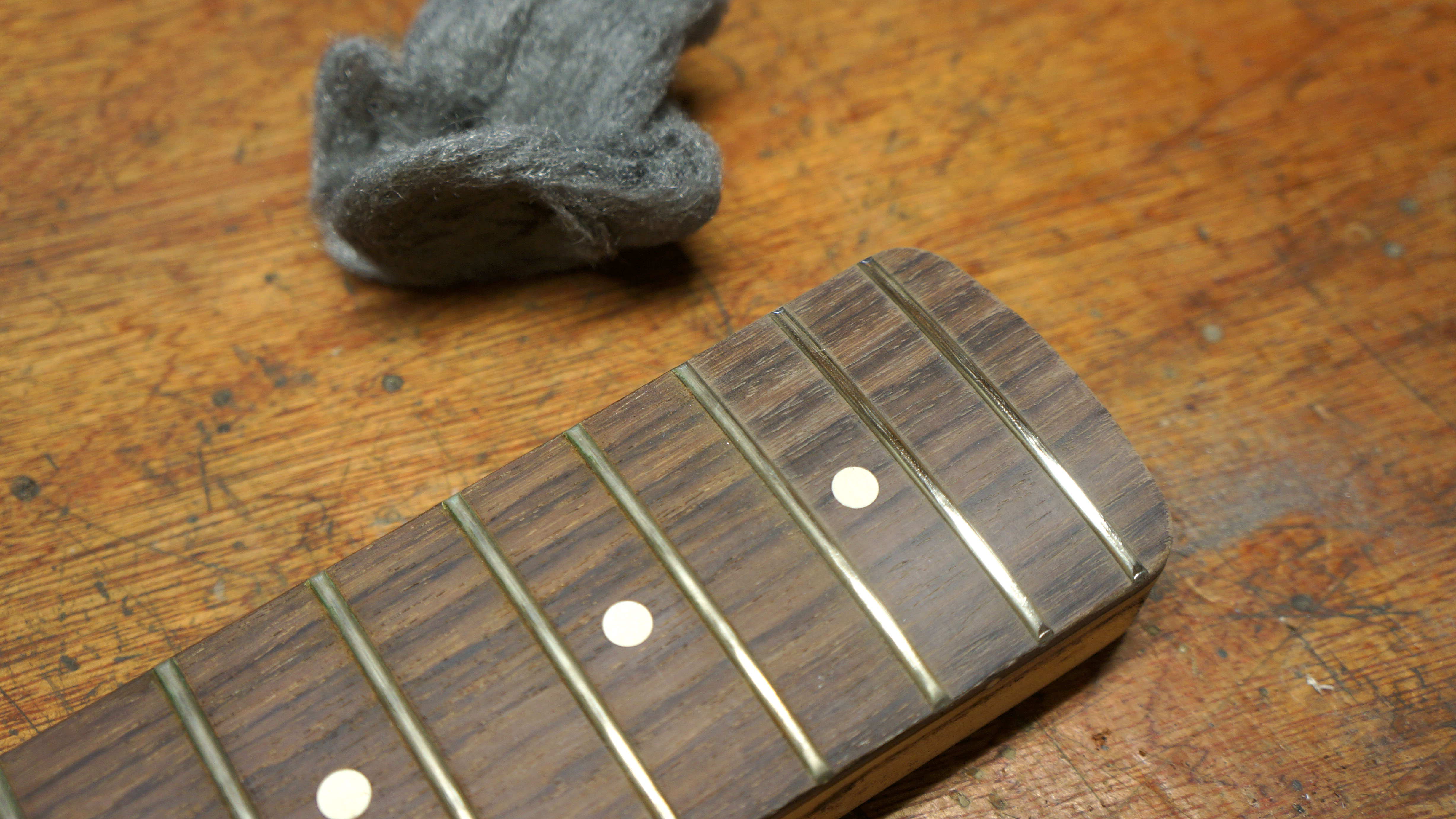
Rub side-to-side making it uniform and when yous're happy with the frets and fretboard's new expect switch management post-obit the grain of the timber. This will hide the very light wire wool marks in with the grain.
Oiling the fretboard
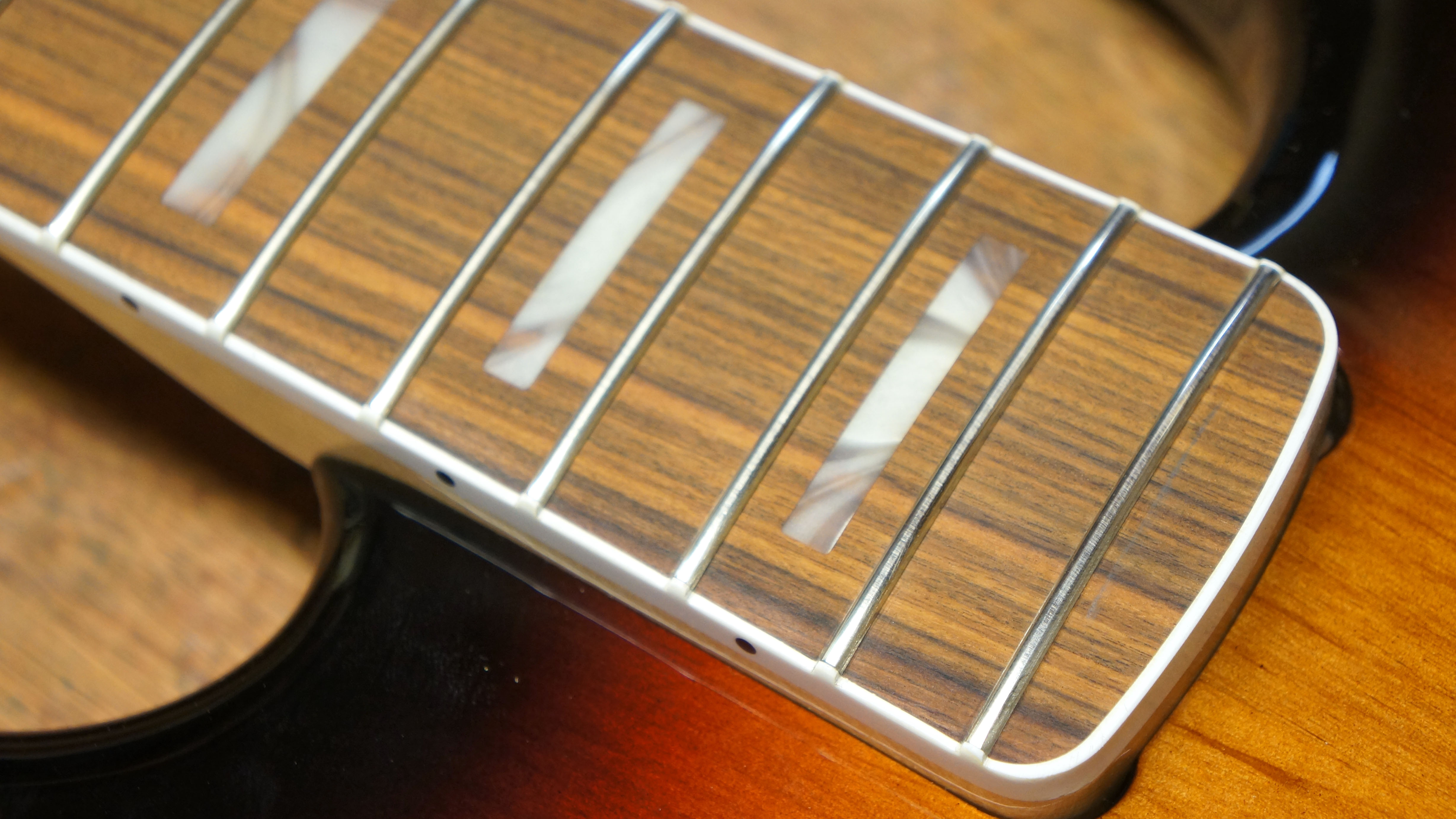
Ebony, pau ferro, Indian rosewood, Brazilian rosewood, wenge and padauk all relish lemon oil merely if super dry out, croaky or thirsty then almond oil will provide a more nourishing boost. Almond oil is a little thicker and then with the harder woods species like Ebony it will take a while to soak in.
For regular application, using lemon oil roughly every six months is grand. Lemon oil has the bonus citric content that will naturally degrease some of that grime build up as you wipe abroad backlog - it even smells peachy too!
We've just scraped the rosewood fretboard and given its state before we're going with Almond oil for a deep nourishment.
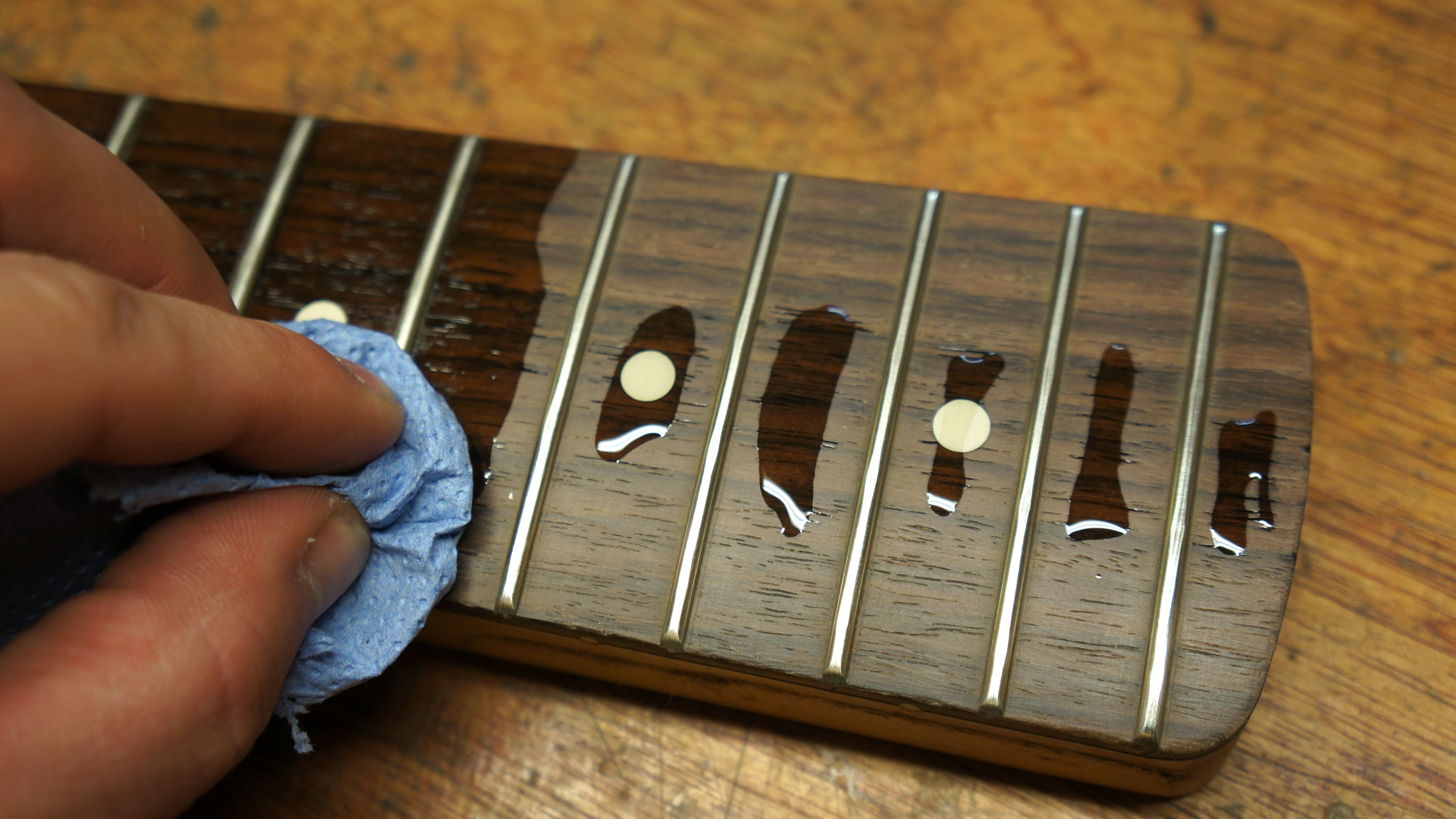
Spooge on plenty and embrace the whole fretboard in it.
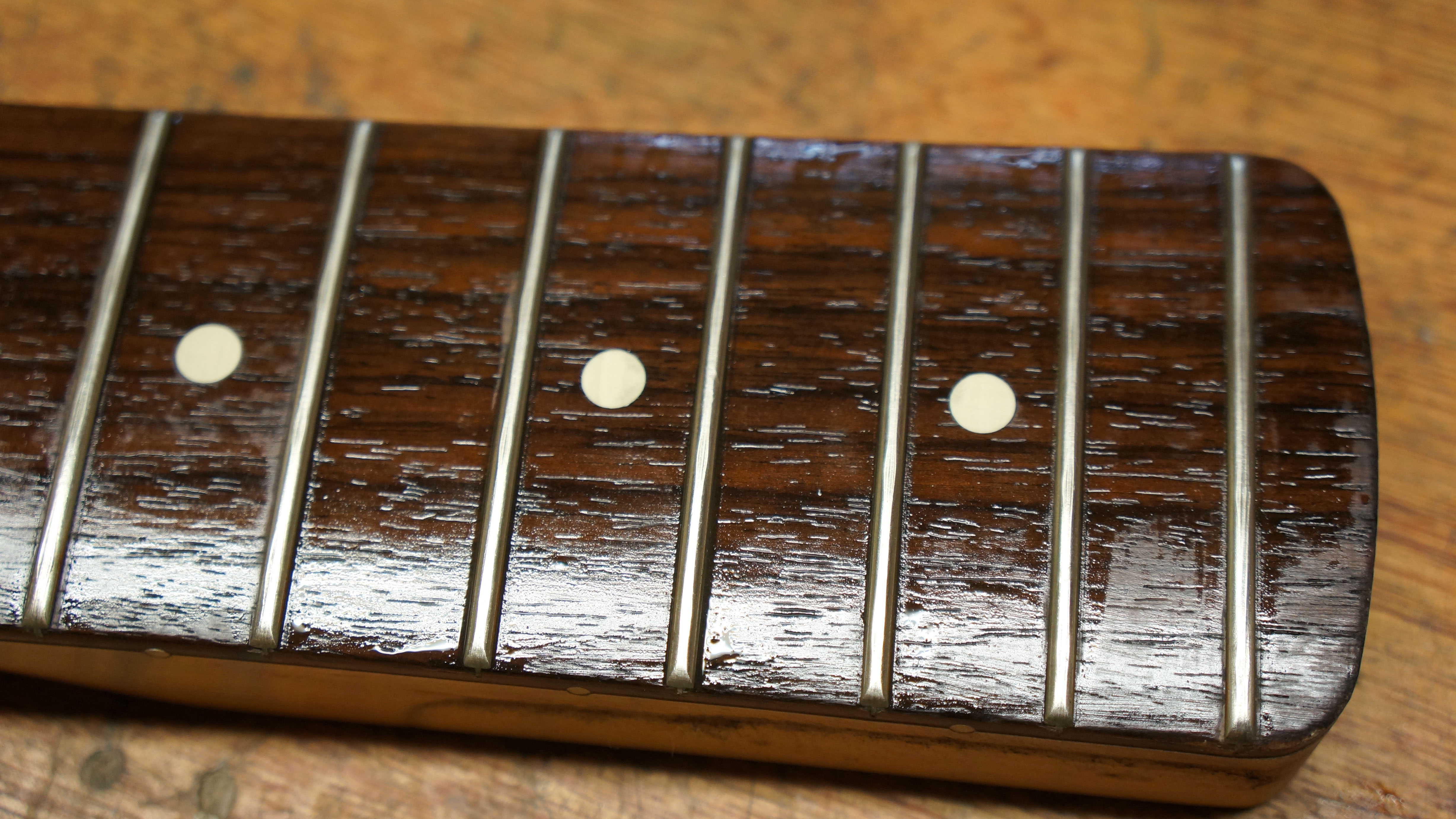
Let the oil soak in for a decent amount of fourth dimension. Every bit this bass fretboard was so bad we left it for 30 mins.
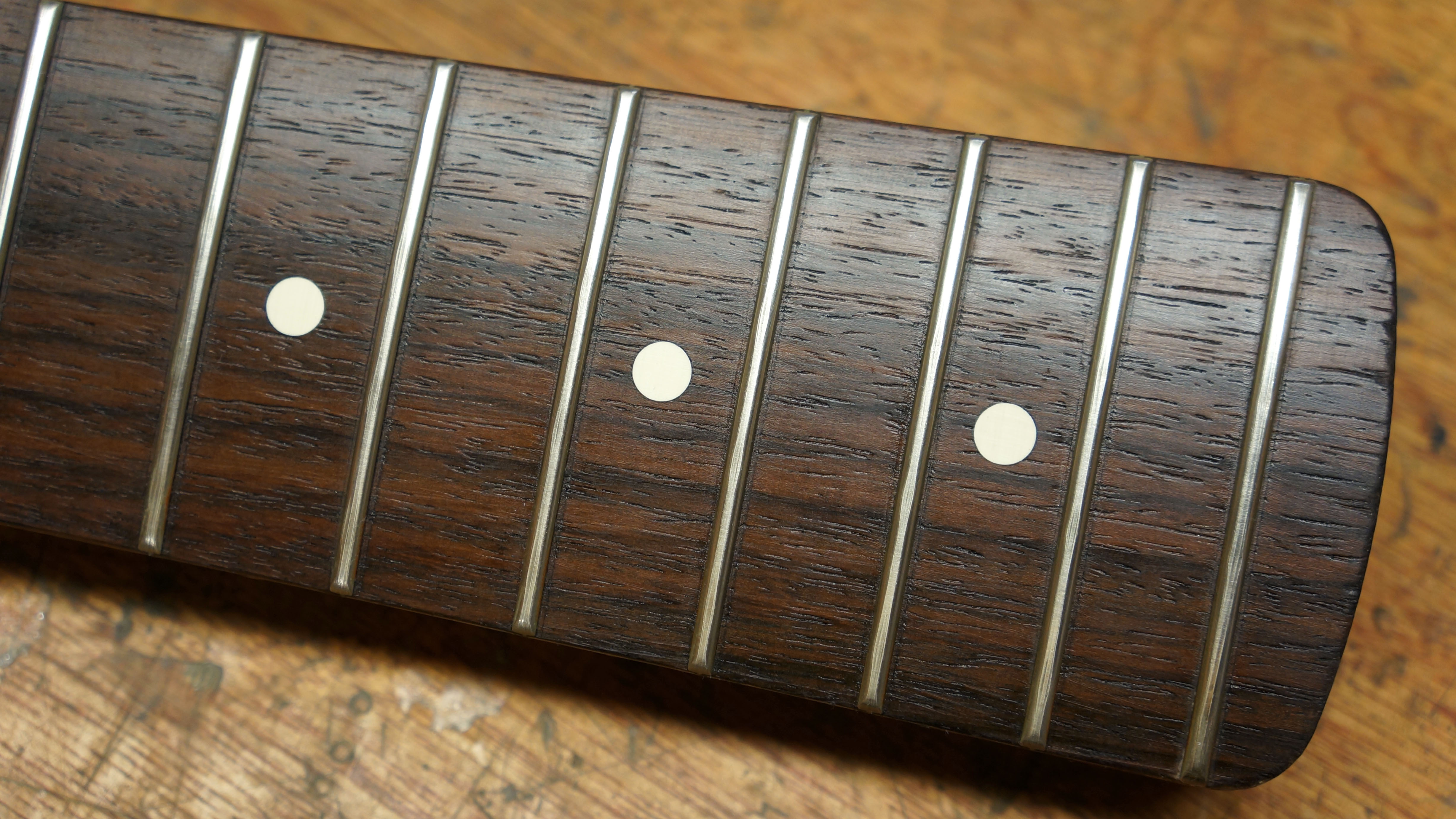
Wipe away the excess oil to reveal the lovely, lovely new fretboard surface! Any residual oil will exist soaked into the fretboard.
How to fix your guitar: a DIY guide to intonation, truss rod, bridge and fretboard maintenance

Source: https://www.musicradar.com/news/how-to-clean-your-guitar-fretboard
Posted by: minterhattheined.blogspot.com
0 Response to "How To Clean Laquered Maple Finger Board"
Post a Comment